Monday, May 20, 2019

UNDERSTANDING THE 2019 FEDERAL ELECTION RESULTS AND WHAT TO DO ABOUT CLIMATE CHANGE


In hindsight, the Coalition’s win on May 18 should not have been a surprise. As numerous media commentators are now pointing out, Bill Shorten was not well liked, his policies made the ALP a big target for criticism and fear-mongering from a range of non-Labor sources and the election wasn’t a defacto referendum on Australia’s climate change policies, regardless of how much activists wanted it to be so.

The most obvious conclusion to draw from the election is that voters readily differentiate between state and federal issues. Labor was hoping the low Coalition vote in the most recent Victorian and West Australian elections would be reflected in federal voting intentions. This didn’t happen and instead voters in those two states assessed the policies and personalities of the various parties and decided to maintain the status quo.

It’s clear that climate change was not the issue that Labor, the Greens and GetUp! were telling us it was. In Queensland, the ALP was devastated electorally because voters put jobs above climate change. In Tony Abbott’s seat, while ‘independent’ Zali Steggall may have campaigned on climate-related issues, voters are more likely to have decided that, after 25 years and with no prospects of Abbott returning to the ministry, it was time for a change.

GetUp! also had a dismay result. They focused on seven Coalition seats and only one of these seats changed hands – in Warringah, Tony Abbott lost for reasons that I believe had nothing to do with climate change and not because Warringah voters suddenly changed from being blue-ribbon conservative Liberal supporters to green activist supporters.

And let’s not forget the hypocrisy of Getup! and other losers in this election. Their national director said that the election results were disappointing ‘as it shows fear campaigns have successfully divided us’, yet GetUp! and various green groups based their own climate change campaigning on fear – we only have 10 years to save the planet!

The union movement can take no joy from Saturday’s results. Not only did their hand-picked man Bill Shorten lose and announce his retirement as opposition leader but, out of the 16 seats they targeted around Australia, 15 of those seats remain unchanged.

Still on climate, according to The Australian, 14 independent candidates signed a climate change pledge under the heading ‘Independence Day’. Only 3 of the 13 were successful – Steggall who as stated above almost certainly didn’t win on her climate change policies; Andrew Wilkie who was going to win anyway because of his personal popularity; and Rebekha Sharkie who also was a sitting member, up against Alexander Downer’s daughter in a country where the promise of political dynasties generally do not attract a great deal of support – e.g., Hanna Beasley failed to win her WA seat in spite of her father’s high profile as the state’s governor and his long political history.

There were other issues. The Australian reported on a swing against Labor in outer Sydney seats where voters had voted against same sex marriage at the referendum in 2017.

Quadrant magazine suggested 11 important reasons why the ALP lost the election. You can make up your own mind on the actual or relative importance of each of these reasons but here they are for your edification:
11. Bob Brown’s motor convoy from Tasmania to the Galilee Basin in April to protest the Adani mine
10. Shorten’s offer to public broadcasters of massive bribes to guarantee their support
9. The shredding of Israel Folau’s $4 million rugby contract for quoting the Bible’s disapproval of homosexuality
8. The Tasmanian Parliament’s decision in April to drop the sex of babies from birth certificates
7. Clive Palmer
6. The birth of royal baby Archie to Meghan and Prince Harry on May 6
5. As a slogan, “Real action on climate change” turned out to be a loser
4. The children’s climate marches
3. Taking the politics of social division as his key to The Lodge, Shorten set out to divide voters by age
2. His revival of once-dormant class warfare
1. Shorten’s most divisive trump card: women

If you’re curious about any of these issues, read the full article here - https://quadrant.org.au/opinion/qed/2019/05/eleven-reasons-why-bill-shorten-blew-it/ (I hope it’s not protected by a paywall!).


WHAT TO DO ABOUT CLIMATE CHANGE

Human-caused climate change is real. It’s a problem that has to be addressed so that global levels of atmospheric CO2 are reduced, but we still have several decades before it’s too late (and even if we do nothing, human beings have a wonderful propensity to adapt!).

The problem for Australia is that we produce about 1.4% of global CO2 emissions. With atmospheric CO2 levels increasing by about 4 parts per million every year, we’re responsible for 0.056 parts per million, with developing countries adding between 1.6 and 2.4 parts per million each year. In other words, Australia could radically change its economy overnight and go carbon free tomorrow, but our CO2 savings would be swamped by the increased emissions from China alone within 19 days! So spending between 200 billion and one trillion dollars (depending who you want to believe) is a severe waste of our taxpayer money.

But Australia is a rich country and there is support for us doing our fair share to help combat what is a global problem of which we are part. So what do we do?

Contrary to what some climate change commentators claim, we still don’t have the technological solutions needed to allow the world to go carbon free while still providing energy to a world where a billion people still live in poverty and another 2 or 3 million are desperate to raise their standards of living. Yes, we can generate electricity cheaply with renewable solar and wind but we still need batteries or pumped hydro or some other way of storing that energy in a way that will provide dispatchable, non-intermittent, affordable and industrial-scale energy. Regardless of what the activists say, such technologies simply do not exist (with the possible exception of nuclear power but it remains expensive and socially unpopular in Australia).

So, Australia is rich, we’re contributing to a global problem and we should be doing our fair share. I believe we should radically change the way we’re spending taxpayer money in Australia and redirect most of it into finding and developing the technologies the world still lacks if we are to become a carbon-free world. We should therefore be putting our money into the CSIRO, our universities and private industry to undertake the R&D and commercialisation on these needed new technologies.

We can do no bigger favour to the citizens of developing countries and to the entire world than to use our brains and imagination to find the technological solutions to their and our problems. Throwing more money at rooftop solar or even large solar farms located hundreds of kilometres from infrastructure and with no nearby industries wanting to use such energy is inefficient and just plain stupid.

 If we really want to save the planet, we have to think globally and develop new energy-related technologies that we can sell or give to a world desperate for effective solutions to the problems of climate change.

Friday, February 22, 2019

Is it time for new small nuclear reactors to power the world?

The little reactors that could

Adrian Cho, Corvallis, Oregon

Science  22 Feb 2019: Vol. 363, Issue 6429, pp. 806-809 DOI: 10.1126/science.363.6429.806

Billed as safe and cheap, NuScale's small reactors aim to revive the ailing nuclear industry and help save a warming planet.

To a world facing the existential threat of global warming, nuclear power would appear to be a lifeline. Advocates say nuclear reactors, compact and able to deliver steady, carbon-free power, are ideal replacements for fossil fuels and a way to slash greenhouse gas emissions. However, in most of the world, the nuclear industry is in retreat. The public continues to distrust it, especially after three reactors melted down in a 2011 accident at the Fukushima Daiichi Nuclear Power Plant in Japan. Nations also continue to dither over what to do with radioactive reactor waste. Most important, with new reactors costing $7 billion or more, the nuclear industry struggles to compete with cheaper forms of energy, such as natural gas. So even as global temperatures break one record after another, just one nuclear reactor has turned on in the United States in the past 20 years. Globally, nuclear power supplies just 11% of electrical power, down from a high of 17.6% in 1996.

Jose Reyes, a nuclear engineer and cofounder of NuScale Power, headquartered in Portland, Oregon, says he and his colleagues can revive nuclear by thinking small. Reyes and NuScale's 350 employees have designed a small modular reactor (SMR) that would take up 1% of the space of a conventional reactor. Whereas a typical commercial reactor cranks out a gigawatt of power, each NuScale SMR would generate just 60 megawatts. For about $3 billion, NuScale would stack up to 12 SMRs side by side, like beer cans in a six-pack, to form a power plant.

But size alone isn't a panacea. “If I just scale down a large reactor, I'll lose, no doubt,” says Reyes, 63, a soft-spoken native of New York City and son of Honduran and Dominican immigrants. To make their reactors safer, NuScale engineers have simplified them, eliminating pumps, valves, and other moving parts while adding safeguards in a design they say would be virtually impervious to meltdown. To make their reactors cheaper, the engineers plan to fabricate them whole in a factory instead of assembling them at a construction site, cutting costs enough to compete with other forms of energy.

Spun out of nearby Oregon State University (OSU) here in 2007, NuScale has spent more than $800 million on its design—$288 million from the Department of Energy (DOE) and the rest mainly from NuScale's backer, the global engineering and construction firm Fluor. The design is now working its way through licensing with the Nuclear Regulatory Commission (NRC), and the company has lined up a first customer, a utility association that wants to start construction on a plant in Idaho in 2023.
NuScale is far from alone. With similar projects rising in China and Russia, the company is riding a global wave of interest in SMRs. “SMRs as a class have a potential to change the economics,” says Robert Rosner, a physicist at the University of Chicago in Illinois who co-wrote a 2011 report on them. In the United States, NuScale is the only company seeking to license and build an SMR. Rosner is optimistic about its prospects. “NuScale has really made the case that they'll be able to pull it off,” Rosner says.

For now, NuScale's reactors exist mostly as computer models. But in an industrial area north of town here, the company has built a full-size mock-up of the upper portion of a reactor. Festooned with pipes, the 8-meter-tall gray cylinder isn't exactly small. It resembles the conning tower of a submarine, one that has somehow surfaced through the dusty ground. NuScale built it to see if workers could squeeze inside for inspections, says Ben Heald, a NuScale reactor designer. “It's a great marketing tool.”

Not everyone thinks NuScale will make the transition from mock-up to reality, however. Dozens of advanced reactor designs have come and gone. And even if NuScale and other startups succeed, the nuclear industry won't build enough plants quickly enough to matter in the fight against climate change, says Allison Macfarlane, a professor of public policy and geologist at George Washington University in Washington, D.C., who chaired NRC from 2012 through 2014. “Nuclear does not do anything quickly,” she says.

A NUCLEAR REACTOR is a glorified boiler. Within its core hang ranks of fuel rods, usually filled with pellets of uranium oxide. The radioactive uranium atoms spontaneously split, releasing energy and neutrons that go on to split more uranium atoms in a chain reaction called fission. Heat from the chain reaction ultimately boils water to drive steam turbines and generate electricity. Designs vary (see sidebar, p. 809), but 85% of the world's 452 power reactors circulate water through the core to cool it and ferry heat to a steam generator that drives a turbine.

The water plays a second safety role. Power reactors typically use a fuel with a small amount of the fissile isotope uranium-235. The dilute fuel sustains a chain reaction only if the neutrons are slowed to increase the probability that they'll split other atoms. The cooling water itself serves to slow, or moderate, the neutrons. If that water is lost in an accident, fission fizzles, preventing a runaway chain reaction like the one that blew up a graphite-moderated reactor in 1986 at the Chernobyl Nuclear Power Plant in Ukraine.

Even after the chain reaction dies, however, heat from the radioactive decay of nuclei created by fission can melt the core. That happened at Fukushima when a tsunami swamped the emergency generators needed to pump water through the plant's reactors.
NuScale's design would reduce such risks in multiple ways. First, in an accident the small cores would produce far less decay heat. NuScale engineers have also cut out the pumps that drive the cooling water through the core, relying instead on natural convection. That design eliminates moving parts that could fail and cause an accident in the first place, says Eric Young, a NuScale engineer. “If it's not there, it can't break,” he says.

NuScale's new reactor housings offer further protection. A conventional reactor sits within a reinforced concrete containment vessel up to 40 meters in diameter. Each 3-meter-wide NuScale reactor nestles into its own 4.6-meter-wide steel containment vessel, which by virtue of its much smaller diameter can withstand pressures 15 times greater. The vessels sit submerged in a vast pool of water: NuScale's ultimate line of defense.

For example, in an emergency, operators can cool the core by diverting steam from the turbines to heat exchangers in the pool. During normal operations, the space between the reactor and the containment vessel is kept under vacuum, like a thermos, to insulate the core and allow it to heat up. But if the reactor overheats, relief valves would pop open to release steam and water into the vacuum space, where they would transfer heat to the pool. Such passive features ensure that in just about any conceivable accident, the core would remain intact, Reyes says.

To prove that the reactor will behave as predicted, NuScale engineers have constructed a one-third scale model. A 7-metertall tangle of pipes, valves, and wires lurks in the corner of a lab at OSU's department of nuclear engineering. The model aims not to run exactly like the real reactor, Young says, but rather to validate the computer models that NRC will use to evaluate the design's safety. The model's core heats water not with nuclear fuel but with 56 electric heaters like those in curling irons, Young says. “It's like a big percolator,” he says. “We set up a test and watch coffee being made for 3 days.”

Making a reactor smaller has a downside, says M. V. Ramana, a physicist at the University of British Columbia in Vancouver, Canada. A smaller reactor will extract less energy from every ton of fuel, he argues, driving up operating costs. “There's a reason reactors became larger,” Ramana says. “Inherently, NuScale is giving up the advantages of economies of scale.”

But small size pays off in versatility, Reyes says. One little reactor might power a plant to desalinate seawater or supply heat for an industrial process. A customized NuScale plant might support a developing country's smaller electrical grid. And in the developed world, where intermittent renewable sources are growing rapidly, a full 12-pack of reactors could provide steady power to make up for the fitful output of windmills and solar panels. By varying the number of reactors producing power, a NuScale plant could “load follow” and fill in the gaps, Reyes says.

SUCH VISIONS point to another key aspect of NuScale's plans: Designers want to dramatically change how nuclear plants are organized and run. Under NRC regulations, a control room can operate no more than two reactors, in which case it must have a staff of at least six operators. NuScale wants permission to run a dozen of their simpler, safer reactors from such a control room. “People have laughed at me when I said I could run this plant with six people,” says NuScale senior operations engineer Ross Snuggerud.

To show that it's possible, NuScale engineers built a fully operational control room to run a virtual power plant. The control room, locked away on the second floor of NuScale's building in an industrial park along the Willamette River, has a wall of jumbo high-resolution monitors that display the 12 virtual reactors' performance. On a recent day, Snuggerud manipulates a touch screen to cook up a mock crisis. Reactivity spikes in one of the 12 virtual reactors. Graphite control rods, which should drop into the core to absorb neutrons and stop the reaction, fail to respond.

An alarm sounds. Lights flash. The core's temperature surges. But the NuScale reactor handles the crisis with ease. Within minutes, temperatures fall as the reactor automatically shunts heat into the pool. So is melting the core impossible? “No responsible engineer would say ‘never,’” Snuggerud says. “But we've done a lot of things right to ensure the core's integrity.”


NuScale engineers must convince NRC that a real plant would run as placidly. Two years ago, the company submitted its 12,000-page application, and the review should conclude by September 2020. The NuScale team has plenty of experience with such reviews. While Reyes was at OSU, he helped NRC certify two conventional Westinghouse designs. If approved, NuScale's design would be the first that NRC has licensed since 2014.

NuScale has responded to more than 1500 formal requests for more information, about a third of the typical number, says Carrie Fosaaen, a licensing specialist at NuScale. “I think that speaks volumes about what we put together up front,” she says. Still, Fosaaen says, “Our design is so different that it's a challenge even for people who have done a lot of licensing.”

If interpreted strictly, Fosaaen says, NRC regulations would push NuScale engineers toward building a miniature version of a conventional reactor—exactly what they don't want to do. So the task, she says, is to explain to regulators how the NuScale design is safe without having to add back layers of complexity.

Some of NuScale's requests are bold. The company has asked NRC to eliminate a requirement for backup electrical power because its reactors can shut down without power. Similarly, NuScale wants to avoid a requirement for an emergency evacuation zone 32 kilometers wide, arguing its reactors pose no risk of spreading radiation beyond the plant boundary. Such a rule change would enable a utility to replace an aging coal plant with a NuScale plant in a populated area. “That's something that utilities really want,” Reyes says.

Such requests strike one prominent critic as hubris. Nuclear safety relies on layers of protection, says Edwin Lyman, a physicist with the Union of Concerned Scientists in Washington, D.C., and NuScale is peeling them away to cut costs. “To say that you know so well how a new reactor will work that you don't need an emergency evacuation zone, that's just dangerous and irresponsible,” he says. However, Jacopo Buongiorno, a nuclear engineer at the Massachusetts Institute of Technology (MIT) in Cambridge, says NuScale's requests are reasonable and likely to win approval. “I would disagree that they're removing safety features,” he says. “Quite the opposite.”

NUSCALE ENGINEERS ARE ITCHING to build a real plant. The company has a tentative deal with Utah Associated Municipal Power Systems (UAMPS), a consortium of 46 public utilities in six western states, to build a 12-pack plant at DOE's Idaho National Laboratory near Idaho Falls as part of UAMPS's carbon-free power project. As DOE's lead nuclear energy lab, Idaho National Laboratory would use one module for research and another to supply the lab with power. The other 10 modules would feed the grid. UAMPS should decide this year about the plant, which would be built by 2027.

NuScale expects other customers to follow. “There are many companies that don't want to be first but would clearly like to be second in line,” says Tom Mundy, NuScale's chief commercial officer. According to a 2014 report by the National Nuclear Laboratory in Sellafield, U.K., by 2035 SMRs could provide 65 to 85 gigawatts of power globally, a building spree worth between $320 billion and $510 billion. Engineers in Argentina, China, Russia, and South Korea have all developed SMR designs. However, because of the quality of its design, “internationally, NuScale is going to be a formidable competitor,” Rosner predicts.

To succeed, NuScale will have to compete with cheap natural gas. The company aims to produce electricity at a total cost, including construction and operations, of $65 per megawatt-hour. That's about 20% higher than the current cost of energy from a gas-powered plant. However, Rosner says, “The price of gas isn't going to stay low forever.” Countries also could put a price on carbon emissions, which would drive up the cost of fossil-fuel power. In fact, a September 2018 report from MIT indicated that a carbon tax could make nuclear competitive with gas.

Nuclear power could face even stiffer competition from renewable sources of energy such as wind and solar power, which are getting cheaper and cheaper, Ramana says. And given the numbers, Lyman says he expects NuScale will find few customers—and that's only if DOE subsidizes the deals, as it has for UAMPS. “I just don't see this tsunami of small reactors around the world,” he says, “and it's because the economics is so bad.” But like many experts, Reyes argues that an energy economy based on renewables will require some form of steady “baseload” power—and nuclear, unlike gas, can deliver it without carbon emissions.

Although NuScale is eager to break ground in the United States, an indicator of its prospects may come from across the Atlantic. To reduce carbon emissions, the United Kingdom has committed to shuttering its remaining seven coal-fired power plants by 2025. It could replace them with gas-fired plants, but NuScale is trying to persuade U.K. government officials to make a bolder choice and opt for its nuclear plants. “We are not a concept, we are not a technology that is still on the drawing board,” Mundy says. “We're real.” A few years should tell whether that's true.

Friday, February 01, 2019

Liberal MPs should support Mark McGowan in his fight with the CFMMEU

History contains many lessons that current politicians and governments need to understand.

In the 1980s, with Bob Hawke and Paul Keating in charge of the federal Labor government, the Liberal Party took a decision to support the government in the Senate and pass legislation that was deemed to be good for the future of the nation. The Liberals didn't abandon their role as the official 'opposition' but Hawke and Keating were prepared to stand up to the unions and propose legislation that would harm the union movement but bring long term benefits for all Australians.

To the small number of Liberal MPs who believed their only goal in life was to win government and hence to oppose everything, this decision to support the Hawke/Keating government was unacceptable. Yet, just a few years later in 1996, John Howard's team won government and ruled for the next 11 years, longer than either of the Hawke or Keating terms of government.

Under Howard's good governance and with the benefits flowing on from the financial and economic decisions made in the 1980s with Liberal support, Australia safely weathered the 2008 global financial crisis and is still enjoying the world's longest period of continuous economic growth - 28 years and counting.

What has all this got to do with Labor's Mark McGowan and the WA Labor government? Well, right now, McGowan is being challenged by the CFMMEU, one of the most left-wing and militant unions in Australia. Christy Cain from the MUA (which is in the process of merging with the CFMEU) is attempting to intimidate McGowan by calling him 'average' and saying he's no friend of his. In contrast, he can only say good things about federal ALP leader Bill Shorten who he describes as well balanced and a good leader.

The problem is that Shorten is beholden to the union movement and has agreed to wind back industrial relation laws to give unions more power and to force Australian companies like BHP to use Australian-crewed ships, significantly increasing costs and hence reducing Australia's competitiveness.

If Liberal MPs want to see good government should Shorten and the ALP win government in May's federal election, they should offer their bipartisan support to Mark McGowan in his fight with the unions. To do this will send a message to Shorten and his union mates that the Liberal Party supports good governance and good legislation, implying that a Shorten Labor government's payoffs to the union movement will be vigorously opposed in the Senate but it may be able to get good legislation through the Senate with Liberal Party support (remembering that the Senate is expected to be controlled by independents and possibly the Greens after May's election).

It's two years until the next state election here in WA and voters like to know that their government is running the state well. But voters also like to know that the opposition won't just oppose everything regardless of its merit but will support good legislation. If McGowan capitulates to the excessive demands of the union movement, the vast majority of West Australians will suffer, remembering that employee membership of unions currently stands at 14%. If McGowan is seen to be supported by Liberal MPs in his fight with the unions, both Labor and Liberals will be seen in a good light by voters.

Only the militant unions will be the losers, should the Liberal Party and its MPs support McGowan.


Tuesday, January 22, 2019

Romanticizing the Hunter-Gatherer

Romanticizing the Hunter-Gatherer

written by William Buckner - Published on December 16, 2017
 

O Man, to whatever country you belong and whatever your opinions, listen: here is your history as I believe I have read it, not in the books of your fellow men who are liars but in Nature which never lies.
Jean-Jacques Rousseau, A Discourse on Inequality

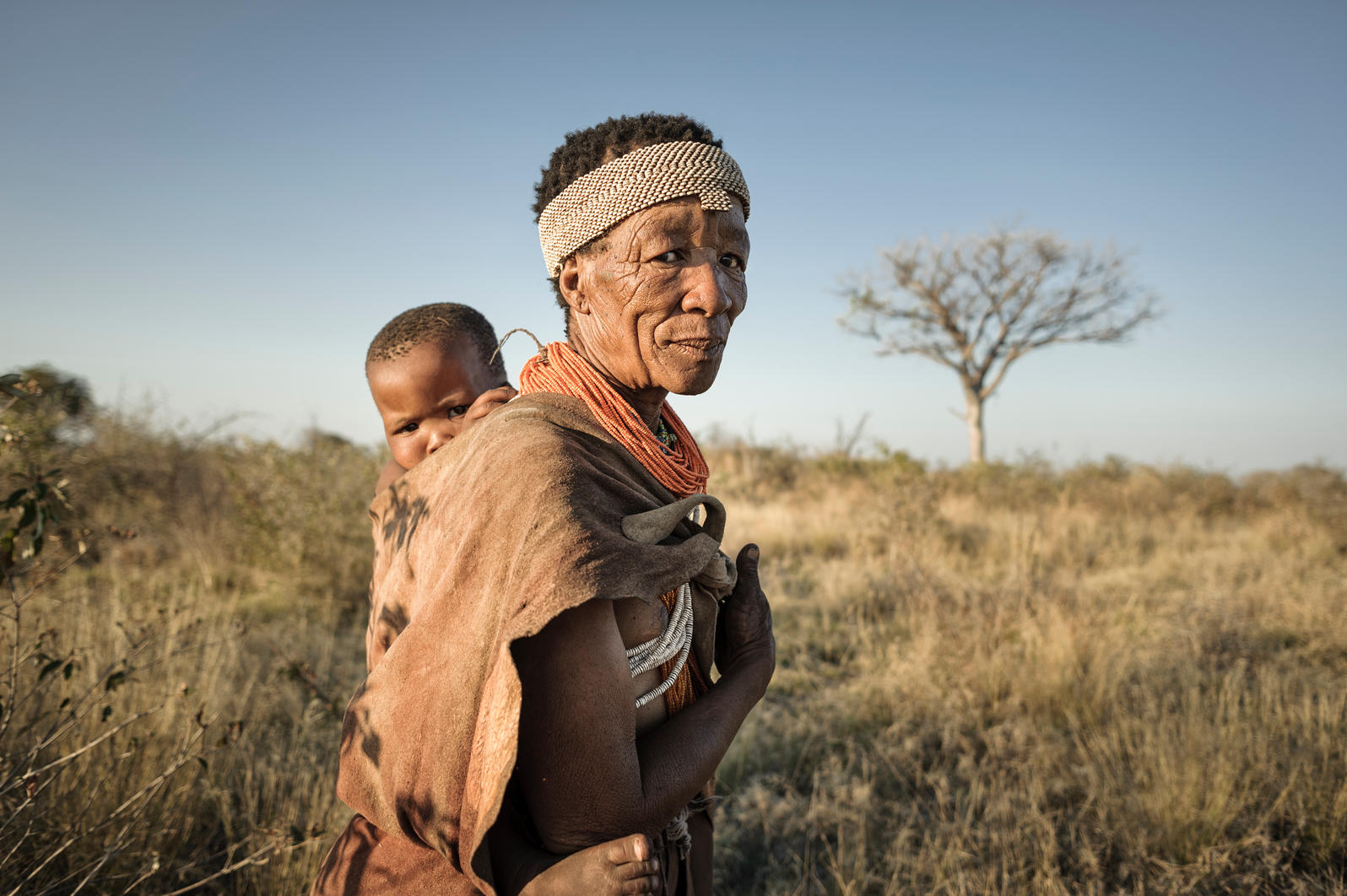
In 1966, at the ‘Man the Hunter’ symposium held at the University of Chicago, anthropologist Richard B. Lee presented a paper that would radically rewrite how academics and the public at large interpret life in hunter-gatherer societies. Questioning the notion that the hunter-gatherer way of life is a “precarious and arduous struggle for existence,” Lee instead described a society of relative comfort and abundance. Lee studied the !Kung of the Dobe area in the Kalahari Desert (also known variously as Bushmen, the San people, or the Ju/’hoansi) and noted that they required only 12 to 19 hours a week to collect all the food they needed. Lee further criticized the notion that hunter-gatherers have a low life expectancy, arguing that the proportion of individuals older than 60 among the !Kung, “compares favorably to the percentage of elderly in industrialized populations.”1 On the basis of Lee’s work, and other material presented at the symposium, anthropologist Marshall Sahlins coined the phrase “original affluent society” to describe the hunter-gatherer way of life.

Affluence without Abundance by James Suzman

It’s not often that you see a 50-year-old paper repeatedly referenced in mainstream publications, but you can find mentions of Lee’s work pretty much everywhere today. In the Guardian, the New York Times, the London Review of Books, the Financial Times, and Salon, among others. Much of this attention has to do with two recently published books, Against the Grain by James C. Scott and Affluence without Abundance by James Suzman, both of which are informed by Lee and Sahlins’s conception of hunter-gatherer affluence. An article in the September 18 issue of the New Yorker by John Lanchester heavily cites each of these books in order to make “The Case Against Civilization.”
So, are Lee and Sahlins, and Scott and Suzman, and Lanchester correct? Is the hunter-gatherer lifestyle a more optimal way to live, and have the benefits of civilization been drastically overstated?
Let us first revisit the !Kung themselves. As Lee himself would later mention in his 1984 book on the Dobe !Kung, his original estimate of 12-19 hours worked per week did not include food processing, tool making, or general housework, and when such activities were included he estimated that the !Kung worked about 40-44 hours per week.2 Lee noted that this number still compares quite favorably to the average North American wage earner, who spends over 40 hours a week above their wage labor doing housework or shopping. Even with the revised figures, this seems to indeed point to a life of greater leisure among hunter-gatherers (or, at least, among the !Kung) than industrialized populations. However, it is important to note that this does not take into account the difficulty or danger involved in the types of tasks undertaken by hunter-gatherers. It is when you look into the data on mortality rates, and dig through diverse ethnographic accounts, that you realize how badly mistaken claims about an “original affluent society” really are.

While you’ll read much about Lee’s work in the popular press, you’ll find little on his critics. Anthropologists Henry Harpending and LuAnn Wandsnider wrote, “Lee’s (1968, 1969, 1979) studies of !Kung diet and caloric intake have generated a misleading belief among anthropologists and others that !Kung are well fed and under little or no nutritional stress.”3 They note that “1964 may have been an unusually productive year for bush food,” and compare it with work describing the severe effects of the 1973 environment, “…people were starving, and weight loss and widespread social disruption occurred.” In 1986, Nancy Howell wrote that “…the !Kung are very thin and complain often of hunger, at all times of the year.”4  In Hunter and Habitat in the Central Kalahari DesertGeorge B. Silberbauer states that, “Undoubtedly Bushmen do succumb in years of very serious drought,” and describes how 37 individuals of another San population, the G/wi, died of dehydration during the drought of 1939.5 And in a 1986 article entitled “Ethnographic Romanticism and the Idea of Human Nature,” Melvin Konner & Marjorie Shostak summed it up well, stating that, “Data on morbidity and mortality, though not necessarily relevant to abundance, certainly made use of the term “affluent” seem inappropriate.”6

Two Hadzabe men in Tanzania returning from a hunt.

In his later work, Lee would acknowledge that, “Historically, the Ju/’hoansi have had a high infant mortality rate…”7 In a study on the life histories of the !Kung Nancy Howell found that the number of infants who died before the age of 1 was roughly 20 percent.8 (As high as this number is, it compares favorably with estimates from some other hunter-gatherer societies, such as among the Casiguran Agta of the Phillipines, where the rate is 34 percent.)9  Life expectancy for the !Kung is 36 years of age.10 Again, while this number is only about half the average life expectancy found among contemporary nation states, this number still compares favorably with several other hunter-gatherer populations, such as the Hiwi (27 years) and the Agta (21 years). Life expectancy across pygmy hunter-gatherer societies is even lower, ranging from about 16-24 years, although this may have as much to do with pygmy physiology as with the hunter-gatherer lifestyle.11

Much is made of the increased risk of infectious disease in large, concentrated, sedentary populations, but comparatively little attention has been given to the risk of ‘traveler’s diarrhea’ common among hunter-gatherers. For mobile groups, infants, the elderly, and other vulnerable individuals have little opportunity to develop resistance to local pathogens. This may help explain why infant and child mortality among hunter-gatherers tends to be so high. Across hunter-gatherer societies, only about 57% of children born survive to the age of 15. Sedentary populations of forager-horticulturalists, and acculturated hunter-gatherers, have a greater number of children surviving into adulthood, with 64% and 67%, respectively, surviving to the age of 15.

But what about egalitarianism? In a 2004 study, Michael Gurven marshals an impressive amount of cross-cultural data and notes that hunters tend to keep more of their kill for themselves and their families than they share with others.12 While there is undeniably a great deal of sharing across hunter-gatherer societies, common notions of generalized equality are greatly overstated. Even in circumstances where hunters give away more of their meat than they end up receiving from others in return, good hunters tend to be accorded high status, and rewarded with more opportunities to reproduce everywhere the relationship has been studied.13 When taking into account ‘embodied wealth’ such as hunting returns and reproductive success, and ‘relational wealth’ such as the number of exchange and sharing partners, Alden Smith et al. calculated that hunter-gatherer societies have a ‘moderate’ level of inequality, roughly comparable to that of Denmark.14 While this is less inequality than most agricultural societies and nation states, it’s not quite the level of egalitarianism many have come to expect from hunter-gatherers.

In the realm of reproductive success, hunter-gatherers are even more unequal than modern industrialized populations, exhibiting what is called “greater reproductive skew,” with males having significantly larger variance in reproductive success than females.15 Among the Ache of Paraguay, males have over 4 times the variance in reproductive success that females do, which is one of the highest ratios recorded. This means some males end up having lots of children with different women, while a significant number of males end up having none at all. This is reflected in the fact that polygynous marriage is practiced in the majority of hunter-gatherer societies for which there are data.

Across these societies, the average age at marriage for females is only 13.8, while the average age at marriage for males is 20.7.16 Rather than defending what would be considered child marriage in contemporary Western societies, anthropologists often omit mentioning this information entirely.

According to anthropologists Douglas Fry and Geneviève Souillac, “Nomadic forager data suggest a human predilection toward equality, including gender equality, in ethos and action,”17 yet the available data do not support this notion in the slightest. On the contrary, in 1978 Robert Tonkinson had found that, among the Mardu hunter-gatherers of Australia, “Mardu men accord themselves greater ritual responsibility, higher status, more power, and more rights than women. It is a society in which male interests generally prevail when rights are contested and in the centrally important arena of religious life.”18 Among the Hiwi of Venezuela, and the Ache of Paraguay, female infants and children are disproportionately victims of infanticide, neglect, and child homicide.19 20 It is in fact quite common in hunter-gatherer societies that are at war, or heavily reliant on male hunting for subsistence, for female infants to be habitually neglected or killed.21 22 In 1931, Knud Rasmussen recorded that, among the Netsilik Inuit, who were almost wholly reliant on male hunting and fishing, out of 96 births from parents he interviewed, 38 girls were killed (nearly 40 percent).23

It is also instructive to compare the homicide rates of hunter-gatherer societies with those of contemporary nation states. In a 2013 paper entitled “From the Peaceful to the Warlike,” anthropologist Robert Kelly provides homicide data for 15 hunter-gatherer societies.24

Kelly’s table is published in ‘War, Peace and Human Nature: The Convergence of Evolutionary and Cultural Views’ edited by Douglas P. Fry, p 153.

11 of these 15 societies have homicide rates higher than that of the most violent modern nation, and 14 out of the 15 have homicide rates higher than that of the United States in 2016. The one exception, the Batek of Malaysia, have a long history of being violently attacked and enslaved by neighboring groups, and developed a survival tactic of running away and studiously avoiding conflict. Yet even they recount tales of wars in the past, where their shamans would shoot enemies with blowpipes.25 Interestingly, Ivan Tacey & Diana Riboli have noted that “…the Batek frequently recount their nostalgic memories of British doctors, administrators and army personnel visiting their communities in helicopters to deliver medicines and other supplies,” which conflicts with the idea that hunter-gatherer societies would have no want or need of anything nation states have to offer. From 1920-1955 the !Kung had a homicide rate of 42/100,000 (about 8 times that of the US rate in 2016), however Kelly mentions that, “murders ceased after 1955 due to the presence of an outside police force.”

Many of the recent articles in the popular media on hunter-gatherer societies have failed to represent these societies accurately. The picture you get from reading articles in publications like the New Yorker and the Guardian, or from anthropologists like Douglas Fry and James Suzman, is often quite different from what a deep dive into the ethnographic record reveals. The excessive reliance on a single paper published 50 years ago has contributed to some severe misconceptions about hunter-gatherer ‘affluence,’ and their relative freedom from scarcity and disease. There is a tendency to downplay the benefits of modern medicine, institutions, and infrastructure – as well as the very real costs of not having access to them – in these discussions.  And, despite what some may wish to believe, the hunter-gatherer way of life is not a solution to the social problems found in modern nation states.

So, what explains the popularity of this notion of an “original affluent society”? Why do people in societies with substantially greater life expectancy, reduced infant mortality, greater equality in reproductive success, and reduced rates of violence,26 27 romanticize a way of life filled with hardships they have never experienced? In wealthy, industrialized populations oriented around consumerism and occupational status, the idea that there are people out there living free of greed, in natural equality and harmony, provides an attractive alternative way of life. To quote anthropologist David Kaplan, “The original affluent society thesis then may be as much a commentary on our own society as it is a depiction of the life of hunter-gatherers. And that may be its powerful draw and lasting appeal.”28 One might think that if avarice, status hierarchies, and inequality are peculiarly modern phenomena, then maybe they aren’t part of human nature, and with the right kind of activism, and enough forward-thinking individuals, such problems can be readily solved by changing the culture.

Conversely, to look across human cultures and notice that even the smallest and most ‘egalitarian’ societies are still plagued by problems of violence, sexism, xenophobia, and inequality may be disheartening for many political progressives and anthropologists dedicated to social justice. These problems are not new–in fact they are very old indeed–and they cannot simply be wished away or made to disappear with misleading commentary. But there is a concern that acknowledging the deep roots of many human social ills is to excuse them, or to concede that they can never be mitigated or overcome. This is not only defeatist, it is completely misguided. Recent human history is undeniably a story of enormous progress. If global declines in child mortality, hunger, violence, and poverty, and increases in life expectancy do not represent progress, then the word simply has no meaning.

Additionally, progressives and many anthropologists understandably do not wish to denigrate other cultures, or to give the appearance of doing so. In his book Sick Societies, anthropologist Robert Edgerton writes, “…certain practices, all anthropologists know, are sometimes not reported because doing so would offend the people being described or discredit them in the eyes of others.”29 Anthropologists often show an admirable concern for the well-being of people in the societies they study, and exercise great care in considering how their work will be interpreted by outsiders. But academics and media figures have a responsibility to report the truth as accurately as possible, and when their values prevent them from doing so they do a disservice to the public, and risk damaging their own credibility.

At this year’s annual meeting of the American Anthropological Association, President Alisse Waterston said that the “responsibility now for anthropologists is to participate in envisioning an alternative world.” Wanting to help shape a better world is a worthy goal. I do not doubt the good intentions of President Waterston or many of the other anthropologists who see flaws in their own societies and feel a deep responsibility to help make the world a better place. But envisioning a better world cannot come at the expense of accurately describing the existing one. If academics and journalists are unwilling to report uncomfortable facts, then they have no one but themselves to blame if they suffer a consequent loss of public trust.

For as long as humans have been around, people the world over have faced similar struggles: getting enough to eat, navigating social relationships, dealing with parasites and disease, raising their young. It’s a nice idea to believe that somewhere deep in the past, or still today in a more remote part of the world, there existed or exists a society that has figured it all out; where everyone is healthy and happy and equal, untouched by the difficulties of modern living. But even if violence, inequality, discrimination, and other social problems are universal and part of human nature, that doesn’t mean their prevalence can’t be reduced. They can and recent trends make this abundantly clear. Denying the scope of the problem, pretending that these social issues are uniquely modern or uniquely Western, or the product of agriculture or capitalism, does not help to fix our contemporary social ills. Instead it leaves us more confused about the causes of these problems, and, consequently, less equipped to solve them.

William Buckner is a student of Evolutionary Anthropology at UC Davis. He is interested in cultural evolution and understanding human conflict patterns across cultures. He can be followed on Twitter @Evolving_Moloch

References available at:  https://quillette.com/2017/12/16/romanticizing-hunter-gatherer/

Tuesday, January 15, 2019

Strongest opponents to science-based issues (GM, vaccination) know the least while thinking they know the most!

Strongest opponents of GM foods know the least but think they know the most

Analysis of surveys from US, France and Germany could also have implications for science communication in other fields
The most extreme opponents of genetically modified foods know the least about science but believe they know the most, researchers have found.

The findings from public surveys in the US, France and Germany suggest that rather than being a barrier to the possession of strongly held views, ignorance of the matter at hand might better be described as a fuel.

“This is part and parcel of the psychology of extremism,” said Philip Fernbach, a researcher at the University of Colorado and co-author of the 2017 book The Knowledge Illusion. “To maintain these strong counter-scientific consensus views, you kind of have to have a lack of knowledge.”

Fernbach and others analysed surveys completed by nationally representative samples of the US, French and German public. Those who took part were asked about their attitudes to GM foods and given instructions on how to judge their understanding of the topic. Next, they completed a scientific literacy test. Among the statements the participants had to wrestle with were: “Ordinary tomatoes do not have genes, whereas genetically modified tomatoes do” (false), and “the oxygen we breathe comes from plants” (true).

The results from more than 2,500 respondents revealed the curious trend. “What we found is that as the extremity of opposition increased, objective knowledge went down, but self-assessed knowledge went up,” Fernbach said.

“The extremists are more poorly calibrated. If you don’t know much, it’s hard to assess how much you know,” Fernbach added. “The feeling of understanding that they have then stops them from learning the truth. Extremism can be perverse in that way.”

The finding has echoes of the Dunning-Kruger effect, the observation from social psychology that incompetence prevents the incompetent from recognising their incompetence. A case in point is the bank robber who was baffled to be caught after rubbing lemon juice into his face in the belief it would make him invisible to security cameras.

Fernbach believes that his findings, reported in Nature Human Behaviour, could have major implications for science and policy communication. One long-held, but rather unsuccessful, belief in the field of communications is that better education is the way to counter anti-scientific attitudes.
“Our research shows that you need to add something else to the equation,” Fernbach said. “Extremists think they understand this stuff already, so they are not going to be very receptive to education. You first need to get them to appreciate the gaps in their knowledge.”

Graham O’Dwyer, a politics lecturer at Reading University with a specific interest in human irrationality, welcomed the study. “It carries a clear argument that is very convincing, and it also feeds into a wider set of concerns in relation to ignorance, overconfidence, and erroneous views in our present times.”

Beyond parallels with the Dunning-Kruger effect, O’Dwyer said two other cognitive biases may feed into the trend Fernbach observed. The first is “active information avoidance”, where people reject information that would help them understand the world because it clashes with their existing beliefs. The second is the “backfire effect”, which describes how people can become entrenched in their original positions after rejecting new information.

“This is often used to explain why many Americans refuse to believe in evolution and why so many Americans feel that vaccination is harmful to children,” O’Dwyer said. “It also figures into the debates on global warming and makes correcting erroneous beliefs highly challenging.”